Why Search Engine Optimization (SEO) is Important for Your Business




What is digital marketing?
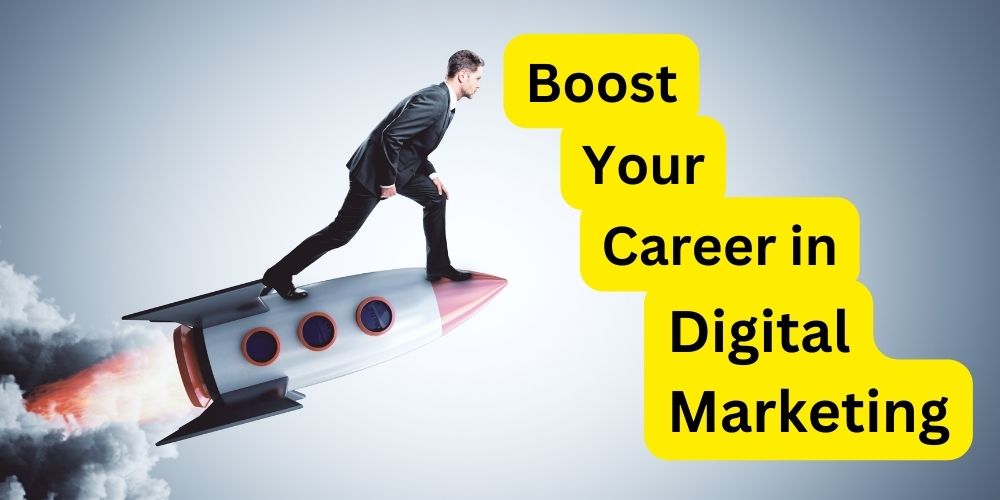
Digital marketing is the practice of promoting and selling products or services using digital technologies and channels. This includes various tactics such as search engine optimization, email marketing, social media marketing, content marketing, and many others. In today’s digitally-driven world, knowing digital marketing has become a must-have skill set for anyone looking to establish a successful career in marketing or business.
While pursuing a digital marketing career, you’ll learn how to identify and target your audience, create effective marketing strategies, measure and analyze your campaign’s success, and more. This knowledge will equip you with valuable skills and set you apart from others in the industry.
However, pursuing a digital marketing course comes with its costs. Digital marketing fees can vary depending on the type of course, institute, and location. Some digital marketing institutes offer placement assistance to help you find a job after completing your course. Therefore, it’s essential to research and compare the different options available to you before making a decision.
The syllabus for a digital marketing course covers essential topics such as digital marketing strategies, social media marketing, SEO, PPC, email marketing, content marketing, analytics, and more. With this comprehensive training, you’ll be prepared for a rewarding digital marketing career.
Benefits of pursuing a digital marketing course
Digital marketing is the future of marketing, and with the growing importance of online presence, it has become necessary for businesses to have a strong online digital marketing strategy. Pursuing a digital marketing course can help you learn the necessary skills and techniques to succeed in the field. Here are some of the benefits of enrolling in a digital marketing course:
1. High demand for digital marketing professionals: With the increasing use of technology and social media, the demand for digital marketing professionals is on the rise. A digital marketing course can equip you with the skills needed to excel in this field and make you a valuable asset to any company.
2. Increased job opportunities: A digital marketing course can help you learn about various job opportunities in the field, including social media manager, digital marketing specialist, content marketer, SEO specialist, and more. This means that you have a wider range of career opportunities to choose from.
3. Practical knowledge: Digital marketing courses offer practical training that allows you to apply the knowledge gained in the classroom to real-life scenarios. This helps you gain practical knowledge of the industry, and you can use this knowledge to create your own successful digital marketing campaigns.
4. Keeps you updated: The digital marketing landscape is constantly evolving, and a digital marketing course can help you stay updated with the latest trends and techniques. You can learn about new social media platforms, marketing automation tools, and other digital marketing strategies that can help you stay ahead of the competition.
5. Networking opportunities: Digital marketing classes offer networking opportunities with other students, trainers, and industry experts. This can help you build valuable connections that can aid you in your career.
If you are interested in pursuing a digital marketing course, you can search for a digital marketing course near me or consider a social media marketing course to enhance your knowledge and skills in the field.
Popular digital marketing courses and their syllabus
Digital marketing classes are in high demand as businesses across industries increasingly shift their focus to the online space. Here are some popular digital marketing courses and their syllabus to help you decide which one would suit your interests and career aspirations the best.
1. Social media marketing course
Social media marketing is an essential aspect of digital marketing today. A course in social media marketing covers the use of various social media platforms for marketing, advertising, and engaging with customers. Some topics covered in this course include social media strategy, content creation, paid advertising, and analytics.
2. Advanced digital marketing course
An advanced digital marketing course builds upon the basics of digital marketing and covers more in-depth topics such as search engine optimization (SEO), pay-per-click (PPC) advertising, and email marketing. The course is designed for experienced digital marketers who want to take their skills to the next level.
3. Best online digital marketing courses
Online digital marketing courses offer the flexibility to learn from anywhere, at any time. The best online digital marketing courses cover a range of topics, including SEO, PPC advertising, social media marketing, email marketing, and analytics.
4. Digital marketing course online
A digital marketing course online is similar to an in-person course, but all the classes and materials are accessible online. Topics covered in an online course may include digital marketing strategy, SEO, content marketing, email marketing, and social media marketing.
5. Digital marketing course near me
If you prefer a more hands-on approach to learning, a digital marketing course near you might be the best option. You can search for digital marketing institutes near you that offer comprehensive courses on digital marketing. These courses cover topics such as digital marketing strategy, SEO, social media marketing, and analytics.
Overall, finding the right digital marketing training institute is crucial for a successful career in digital marketing. Take your time to research and choose wisely.
After completing the 12th standard of the Higher Secondary Certificate (HSC) or an equivalent qualification, every student in India is at a crossroads in their life. They’re conflicted between selecting generally #1, proficient courses including design and medication or then again enlisting for standard degree courses after the twelfth including Four-year certification in liberal arts, Science, Trade, and others.
A good choice can lead to a successful career and a happy life, whereas a bad choice can put you in terrible circumstances. Why is this happening? The reasons are as follows:
There’re no complicated selection tests you’ll need to pass to meet all requirements for a computerized showcasing course.
After 12th grade, excellent digital marketing courses are available to anyone who has completed HSC or is awaiting results. You will only need basic computer and Internet skills.
You don’t have to go through years to turn into an ensured computerized advertiser.
You only have a few months left to advance in practical learning after the 12th grade.
A course in professional digital marketing will also help you prepare for job interviews. As a result, you can start your career much earlier than engineers, doctors, and other people with a standard bachelor’s degree.
To pay tuition and other course-related costs, thousands of engineering and medical students must obtain education loans from banks and other financial institutions.
Additionally, these students typically graduate with debt. Fortunately, courses in digital marketing are accessible to all.
There is no need to take out a loan for education. Additionally, deserving students can receive scholarships in the form of discounts and cash back from some of the best digital marketing courses.
Hold hands with a noticeable computerized showcasing course to procure global capabilities.
You will be able to take online tests offered by Google and Facebook thanks to the course.
You will receive certifications that are valid worldwide once you pass these tests. You can even apply for jobs in the United States, the United Kingdom, and Europe to fulfill your desire to work in advanced nations.
The power of digital marketing is that.
Digital marketers aren’t just employed by Amazon or other online retailers.
In fact, digital marketers are needed by almost every industry, including banks, insurance companies, government departments, healthcare, hospitality, food and beverage, airlines, travel and tourism, and almost every other industry.
That is on the grounds that computerized showcasing assists them with acquiring an edge over contenders. As a result, you can choose the field in which you want to work.
Computerized advertisers get to work at an organization willingly. They can even choose the field in which they want to work.
What offers them such adaptability?
Well, every business has its own digital marketing arm, and every industry operates online.
Government, insurance firms, and banks Businesses in retail, health care, and other sectors are all examples!
Digital marketing is a big reason why a company grows faster than its rivals. Thus, you have a free decision to pick your industry to make a lifelong in computerized showcasing.
Affiliate marketing can also help you make more money if you start a blog or vlog.
You can become an affiliate marketer for big businesses like Amazon, eBay, and others.
An excellent digital marketing course will teach you everything you need to know about affiliate marketing. You can earn money through affiliate marketing even when you’re sleeping or working on other projects.

The beast that is digital marketing is which networks should you be watching? What exactly are SEO and PPC? What are the advantages and disadvantages of each digital marketing strategy? How do you even begin?
We’re going to look at the top 10 kinds of digital marketing to help you out. Although the boundaries between the various options are blurred, at least you will have a sort of menu from which to select.
When making a decision, the standard inquiries will apply: Who are you trying to reach with your marketing efforts and WHY do you want to use digital marketing? This will assist you in selecting the appropriate formats and channels to accomplish your goals.
1. Content Marketing
The term “content marketing” refers to useful and informative content like blog posts, instructional videos, and other forms of media. You can connect with your audience and answer their questions with this kind of marketing. It can also assist in closing sales and generating leads.
The intended audience should be considered when publishing content on a regular basis. By publishing trustworthy, high-quality content, your brand should ideally establish itself as a respected voice in the industry. You want your audience to first turn to you for the most recent industry trends.
2. Search engine marketing
The goal of search engine marketing is to get your website to the top of the results when someone searches for your brand, products, or other relevant terms. Consider both Google (which, let’s face it, is the primary one) and Bing (often installed on business computers, which is advantageous for B2B!). It encompasses both organic or natural search (also known as SEO) and paid search (also known as pay per click, or PPC), as well as mobile devices and desktop computers (as well as smart home assistants these days—see number 10—audio marketing).
3. Video Marketing
Videos that are short and to the point are more effective than texts at attracting customers in today’s fast-paced environment. Live or pre-recorded video content is a dependable option for digital marketing, whether it’s educational or entertaining. Every month, more than 2 billion people search for something on YouTube. Video marketing strategies drive results throughout the marketing funnel, making it a promising chance to reach new customers.
Search engines and videos are used by 80% of customers to learn about products and read reviews. 55% of people do it before making a purchase.
4. Mobile marketing
Many other types of marketing will overlap with mobile marketing, which is almost as broad as digital marketing itself. It involves adapting everything you do on a desktop to a mobile device, as well as doing mobile-specific tasks like sending text messages and using social messaging apps and in-app advertising. If you want to reach a younger audience that spends a lot of time on their phones, this is especially important.
5. Email Marketing
Invite visitors to join your email subscriber list each time they visit your website or business. You can send emails about sales, upcoming events, or new products with their permission. Email marketing is often undervalued, and Lyfe Marketing estimates that for every dollar spent, about $40 in revenue is generated.
The fact that this digital marketing channel should offer value to your audience is the most crucial aspect. If you give those exclusives that they won’t get anywhere else, you can build a relationship that works for both of you and make them more loyal to your brand.
Let’s now examine the specifics, such as when and how to use the various forms of digital marketing, now that we know what they are.
Social Media Marketing
Digital marketing channels include social media marketing and platforms like Facebook and Twitter. To reach a new audience, you can buy ads or create a profile for your business on any social media platform and post about new products, sales, or content that has just been published.
The kind of audience you want to reach will determine which social media platform you use. For instance, Pew Research found that people between the ages of 25 and 29 are best served by Instagram, while people over 65 are best served by Facebook.
Different digital marketing strategies will work better for your business depending on where it is in its development.
SEM, social media, and affiliate/influencer marketing can help you quickly reach new audiences for new businesses looking to expand their audience.
Focus on creating valuable content and cultivating brand loyalty through channels like email marketing after you have established an audience. To ensure that your website continues to receive new organic traffic, create this content with SEO in mind.
Invest in a training course like Simplilearn’s Digital Marketing Training course to advance your digital marketing strategy to the next level. This kind of program will give you all the information you need to make the best strategy.
Social media marketing strategies have expanded in the current corporate environment. Business owners are increasingly curious about how digital marketing contributes to an industry’s and small businesses overall performance. One characteristic is firstly the amount of money successful businesses invest in social media marketing.
How much time should spend on social media? It’s a question that has to be answered, but first, let’s step back discuss and explain strategy. Reaching your objectives or goals depends more on understanding the digital marketing or social marketing platforms and types of content your target audience engages with than on how many hours you spend creating blogs or articles. The secret key to effective social media marketing is quality over quantity.
Using social media to market your business and organization starts with three basic things.
There are many details within these buckets, but going through these 3 steps will help you determine how much time to spend on digital marketing and social media marketing.
Establishing specific outcomes you want to achieve if you use social media for your small business is important. For instance, most people browse the web to see what they can discover for new followers. But you will need to be more selective than that if you wish to make the most of your time.
Do you want to publish five monthly promos for your products or services? In the first 90 days, do you wish to receive 500 followers naturally? Is it your motive or intention to establish yourself as an expert and attract an audience to your website so they might do business with you?
Define your digital marketing or social media goals and explain how they advance your industry’s performance. You might decrease time spent surfing social media and struggling to decide what to post by having a focused approach.
You will know your audience’s social media platforms and what content to share if you take the time to write out your client personas. You can foreshow what content your audience will be interested in if you are aware or familiar with their problems. Creating your first buyer persona? Utilize the Facebook, LinkedIn, or Twitter information you already have to determine when your audience is highly active there (or also use tools like Follower wonk, Moz analytics’ Tweriod, or Sprout Social).
Suppose your target market or audience is a well-skilled professional between the ages of 35 and 45 who mostly uses Facebook and Twitter and needs to answer questions regarding a, b, and c (related to your business). In that case, it’s an example of fundamental buyer persona information applicable to social media.
Calculate and figure out how many hours you have each week across your department (even if the department is just your 45 hours). Then take stock of how much time your entire team right now spends on social media. Track your time in a spreadsheet or with time-tracking software like Harvest or Toggl. Do this for two weeks to see how much time is being spent on social media. It would not be surprising to find that you spend about 25% of your time on social media marketing or digital marketing.
Apart from financial budgeting, business owners also need to know how much time they should invest in digital marketing or social media marketing.
As per the Vertical Response survey, 43 percent of small businesses and industries invest up to 6 hours weekly on social media marketing. This time budget costs about an hour and 12 minutes a day on a five-day workweek.
Your ideal social media presence also differs, depending on the platform. For instance, several professionals recommend spending more time on Twitter marketing than on Instagram. Still, this depends on what your business centers on and who your target visitors are.
Following the recommended amount of presence on one social media platform will not help you reach your clients if they are more active on another site.
Another time investment tip for small business owners would be to perfectly measure how to balance quality and quantity in your social media presence. This aspect of social media marketing traces back to how most websites keep faith both in how mostly you can post and how strong your engagement is from your followers.
For instance, most article or blog post websites count on how long visitors stay to read your article. At the same time, they also measure how often visitor return to determine if they should promote your content with other users on their website.
